
A geologic timeline
Beneath the Ranch
Before there was a cave, there was a sea. Follow 105 million years from the ancient seafloor to the crystal rooms beneath Sonora, Texas.
Chapters
- 01105 million years agoA sea where the ranch stands.
- 0230 million years agoThe plateau rises from the sea.
- 0313.8 million years agoThe water came from below.
- 048.8 million years agoThe cave took shape in levels.
- 05After drainageWater begins to build.
- 06293,000 years agoA sheet of water left a date.
- 07140,000 years agoAnother layer, another time.
- 083,000 years agoA clue at the entrance.
- 09TodayA crystal takes a turn.
01 of 09 · Cretaceous
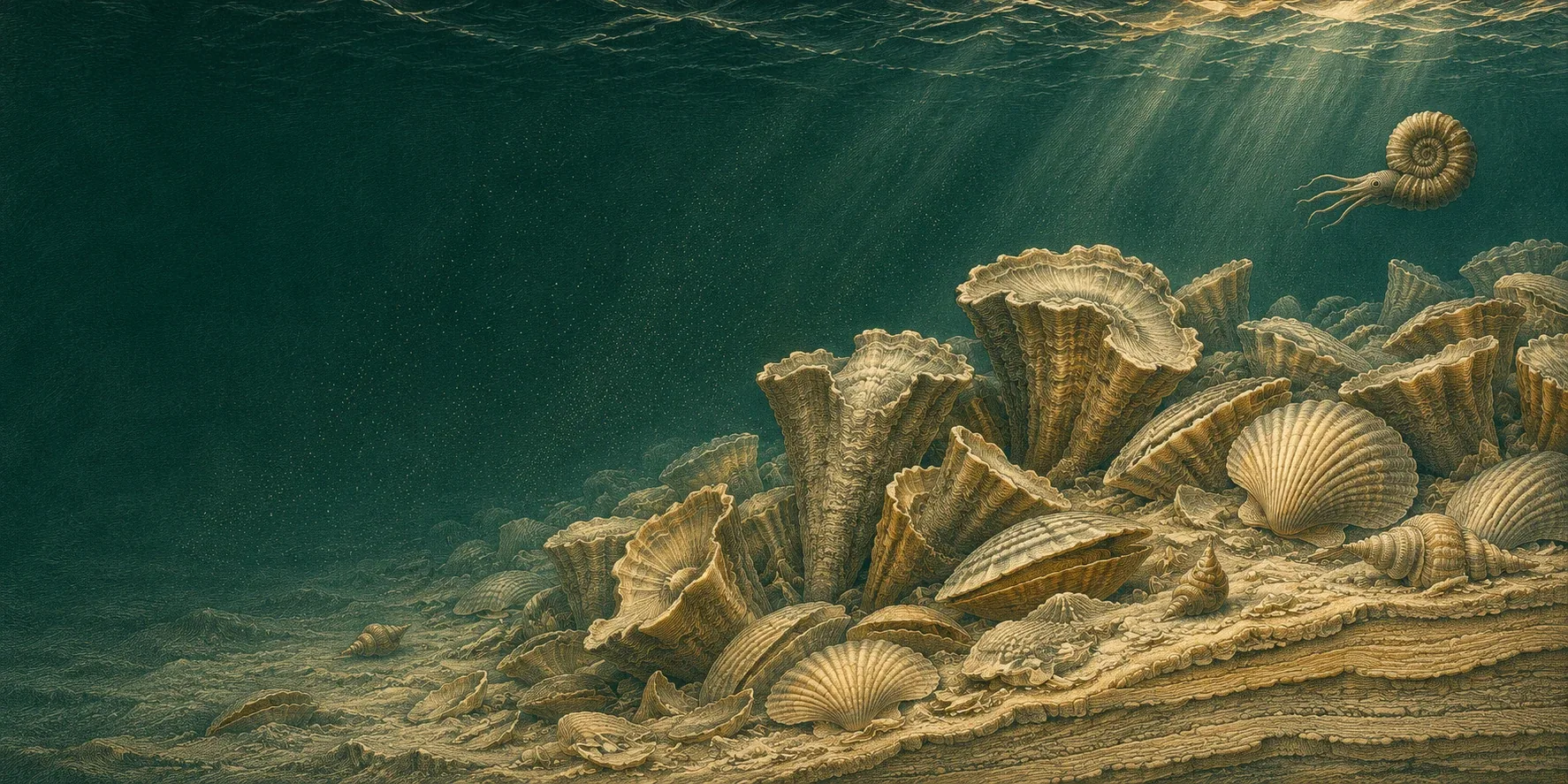
105 million years ago A sea where the ranch stands.
Stand on the ranch today and the ocean feels a long way off. About 105 million years ago, the water here averaged less than 20 feet deep. When shellfish and other marine animals died, their shells sank and mixed with carbonate-rich mud on the seafloor. Burial and pressure slowly hardened the layers into the Segovia Limestone, the rock that now holds the cave.
Geologist’s note
Look for a piece of that sea in the Belly of the Whale. Fossils are visible in the walls where erosion has exposed the limestone.
Guide manual, pp. 1, 8
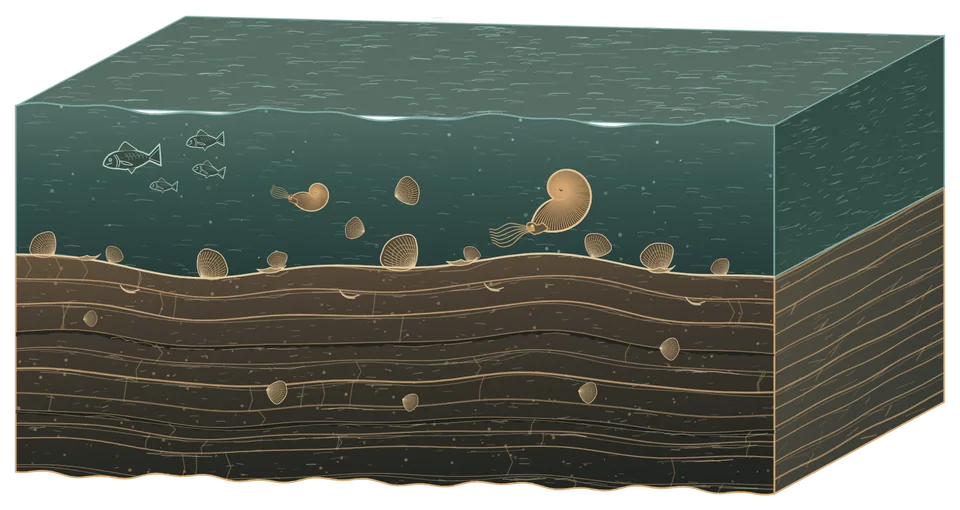
Shell-bearing animals lived in these shallow waters.
02 of 09 · Edwards Plateau · estimated
About 30 million years ago The plateau rises from the sea.
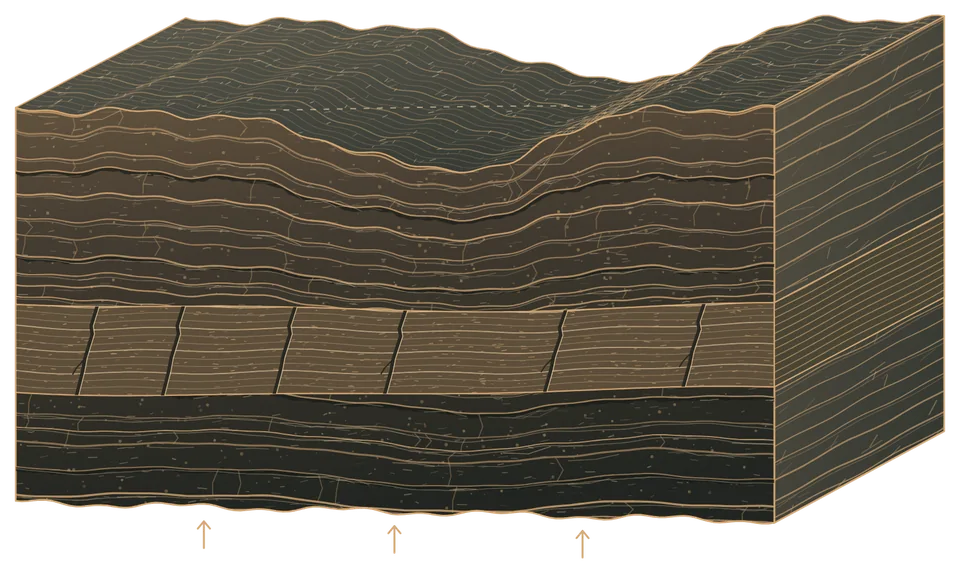
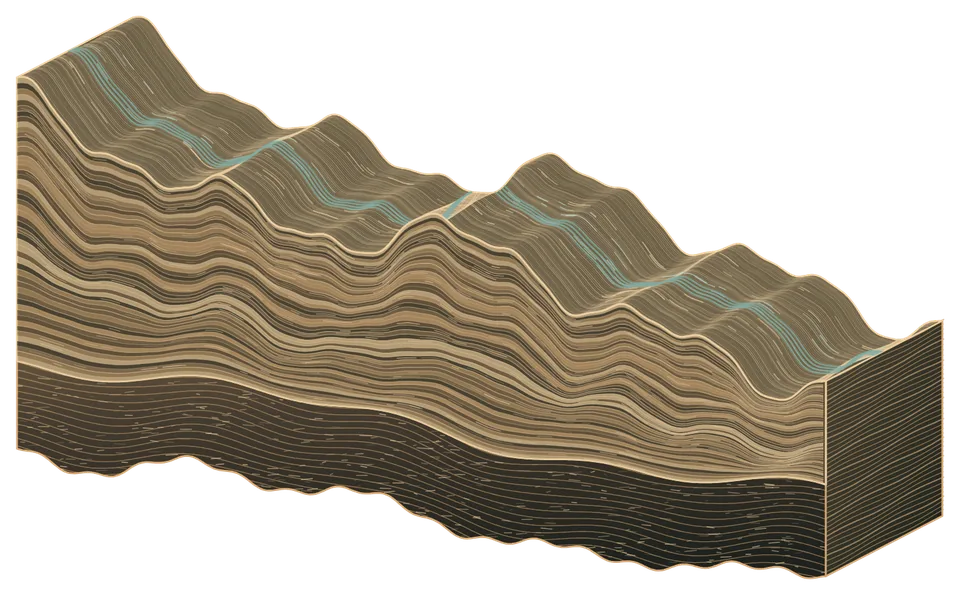
The Sonora area probably stood above sea level by about 30 million years ago. The Segovia Limestone still lay buried beneath younger rock. The weight of those layers had cracked the limestone. As erosion stripped rock away, the release of pressure opened more fractures. Groundwater would later follow those breaks.
Geologist’s note
The timing of emergence is uncertain. Most fractures visible in the cave are joints. Across a joint the rock has cracked but has not shifted. Across the cave’s fault, the beds on one side have moved relative to the other.
Guide manual, p. 1
03 of 09 · Miocene · estimated
13.8 million years ago The water came from below.
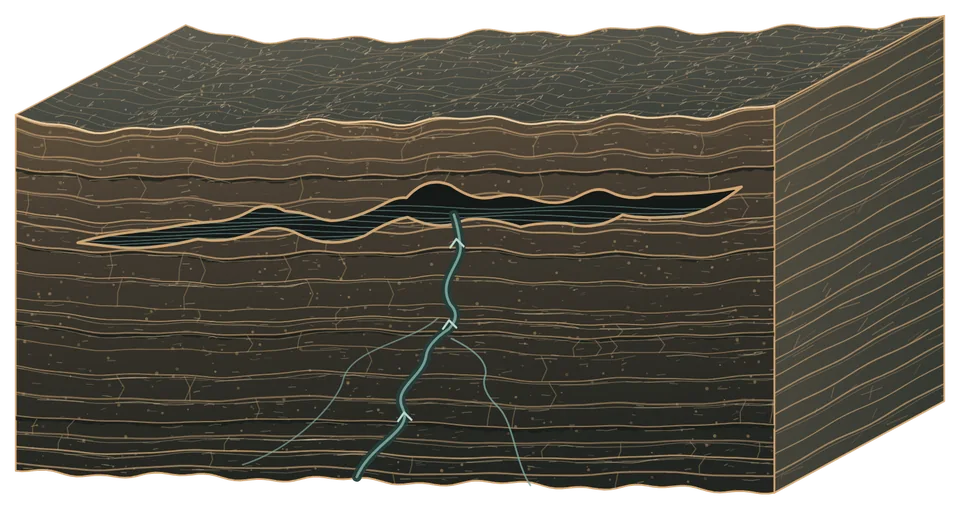
By this time, the sea was long gone. A valley lay over the future cave. Groundwater traveled east through buried limestone and rose under pressure along fractures. Where that water was acidic, it dissolved the rock. The highest known passages began to open.
Geologist’s note
Dr. George Veni estimated the timing from erosion in Sutton County, using about 36 feet per million years. Passage shapes point to rising groundwater. The roles of deep gases and sulfuric acid remain open questions.
Guide manual, pp. 1–4
04 of 09 · Miocene · estimated
8.8 million years ago The cave took shape in levels.
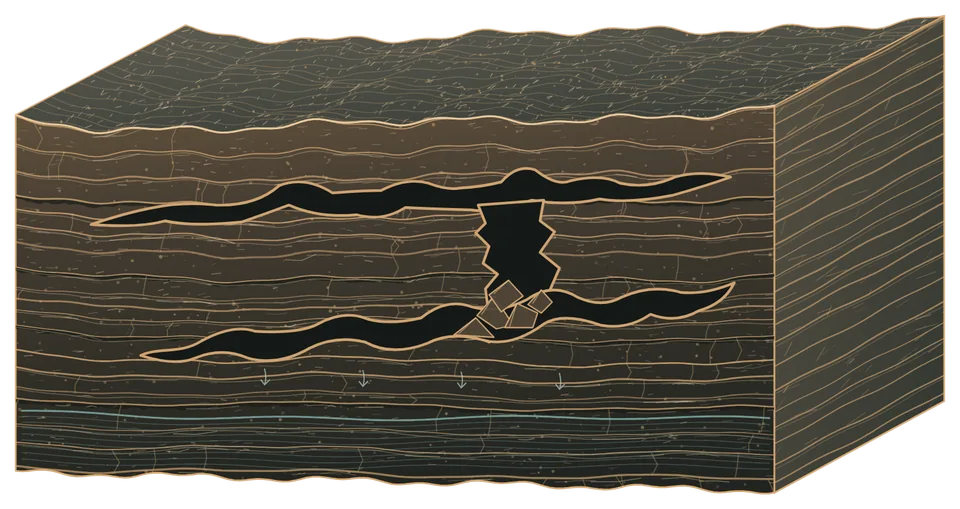
As valleys deepened, the water table fell. Where it lingered, water had time to hollow out another level. By about 8.8 million years ago, the lowest passages we know today had formed. In places, the rock between levels later gave way.
Geologist’s note
At Devil’s Pit, part of the old upper floor still projects from the wall as a ledge. The open space beneath it tells you that at least two passage levels once occupied this room.
Guide manual, pp. 2, 5
05 of 09 · Crystal growth
After the passages drained Water begins to build.
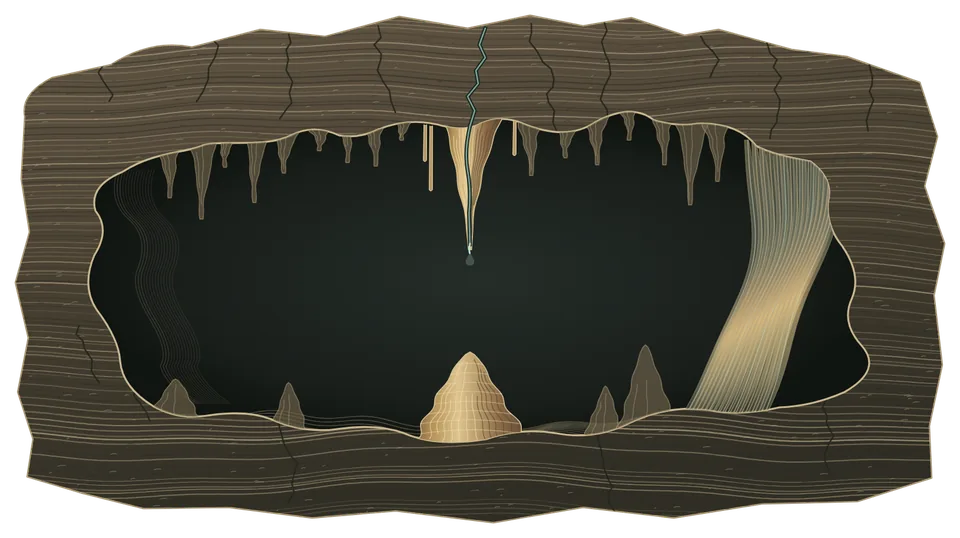
Air filled the drained rooms. When water seeped through a ceiling crack, some of its dissolved carbon dioxide escaped into the cave air. A little calcite stayed behind. Drop after drop built stalactites down from the ceiling and stalagmites up from the floor. Water spreading down a slope left a sheet of flowstone.
Geologist’s note
Most of Sonora’s formations grew in air above the water table. Others, including the pointed dog-tooth spar in the Surprise Room, grew under pool water. Different rooms and different surfaces began growing at different times.
Guide manual, pp. 2–3, 7
06 of 09 · Pleistocene · dated calcite
293,000 years ago A sheet of water left a date.
At the end of the Narrows, water spread over a slope in thin sheets. As carbon dioxide escaped, the water left a skin of calcite. One skin covered another. Geologist Harry Rowe dated the top layer here to about 293,000 years ago.
Geologist’s note
The reported age is 293,334 years, with uncertainty of +35,812 and −26,927 years. It dates the sampled surface layer. Older calcite can lie beneath it.
Guide manual, pp. 3, 6
07 of 09 · Pleistocene · dated calcite
140,000 years ago Another layer, another time.
Near the entrance stairs, Rowe dated the top of a different flowstone deposit to about 140,000 years ago. Two spots on the tour preserve calcite that formed roughly 153,000 years apart.
Geologist’s note
The younger sample measured 139,833 years, with uncertainty of +5,285 and −5,054 years. A formation can grow, pause, and start again as its water supply changes. Its size alone cannot tell you its age.
Guide manual, pp. 5, 7
Age of sampled calcite
| Place | Age (years) | Reported uncertainty |
|---|---|---|
| The Narrows | 293,334 | +35,812 / −26,927 |
| Entrance stairs | 139,833 | +5,285 / −5,054 |
08 of 09 · Holocene · dated organic material
3,000 years ago A clue at the entrance.
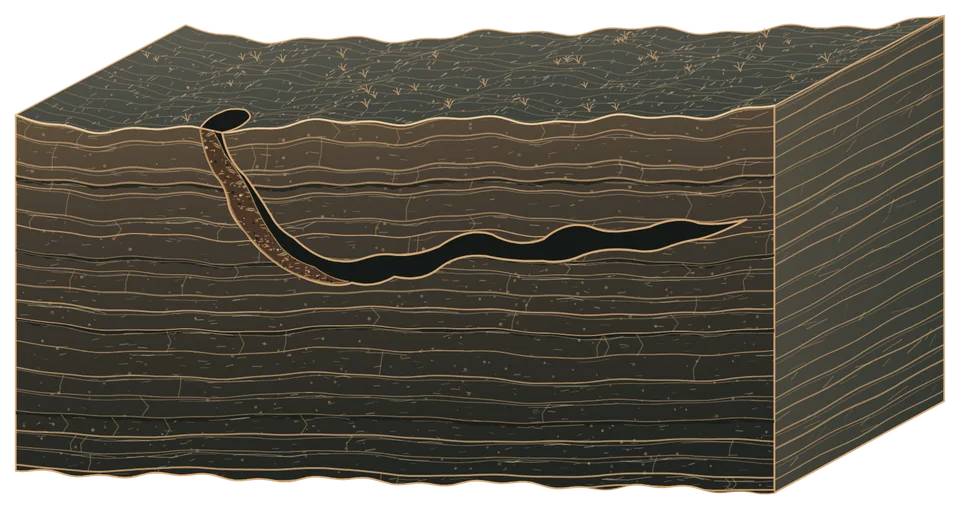
A little way inside the natural entrance, the dark soil from the surface gives out. Rick Toomey carbon-dated organic material in that soil to about 3,000 years ago. It is one clue that the opening we know today is young beside the passages it leads into.
Geologist’s note
The date belongs to the organic material. The entrance shape and the short reach of surface debris also point to a comparatively recent opening, but its exact age is unknown.
Guide manual, pp. 5, 9
09 of 09 · Inside the cave
Today A crystal takes a turn.
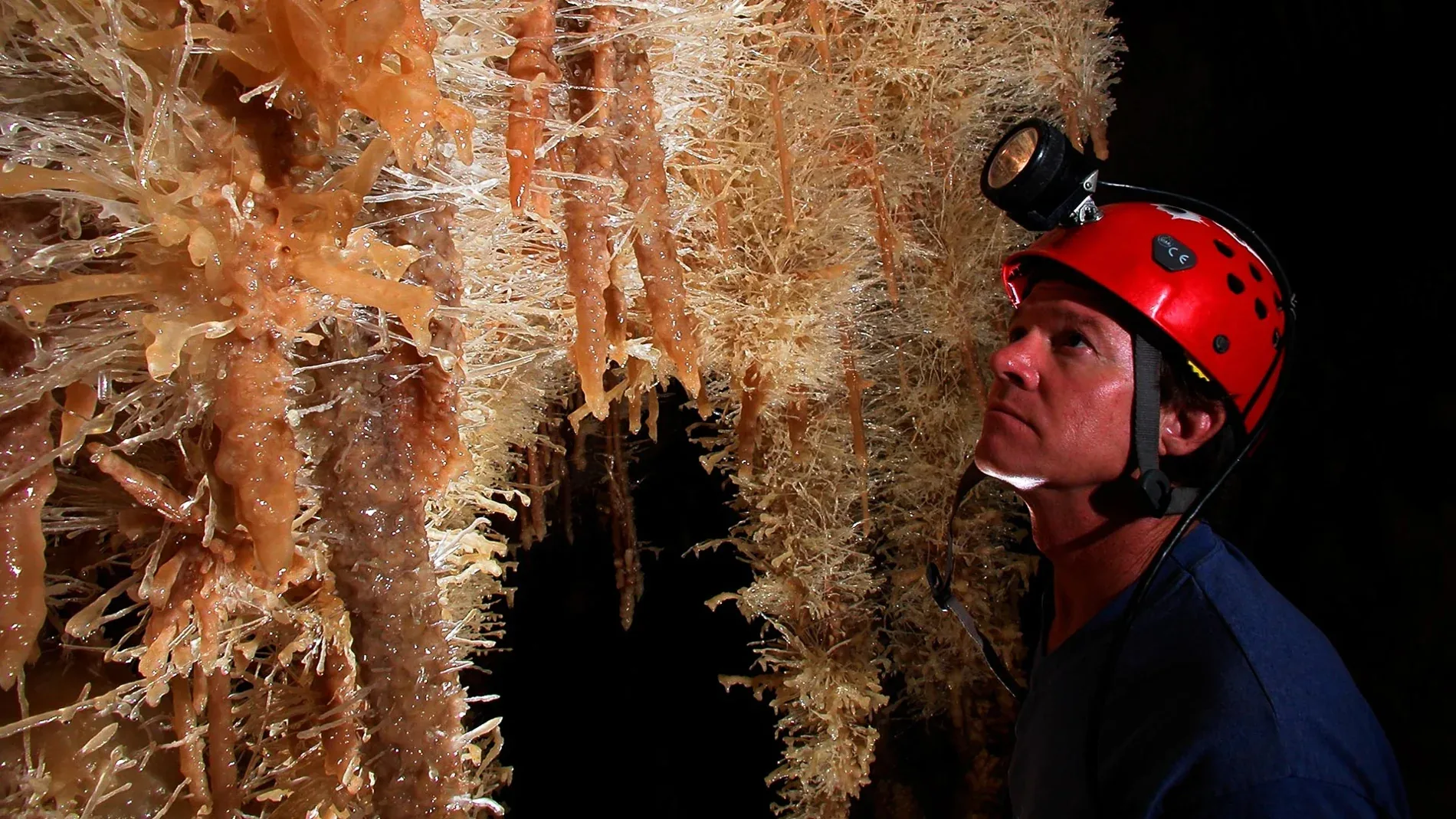
Look closely at a Sonora helictite. Inside is a channel fine enough to draw water along by capillary action. A slow seep delivers calcite to the tip, where the shape of the crystal guides the next bit of growth. That is how a formation can curl back toward the ceiling.
Geologist’s note
Calcite crusts sealed many cave surfaces and channeled seepage through tiny openings. The manual links this to Sonora’s abundance of helictites. At the Crystal Palace, look for rings and branching shapes among the layers.
Guide manual, pp. 3, 8
Field notes
How we know
The geologic record
Dr. George Veni wrote the Geology Manual for Guides at Caverns of Sonora (February 2016). Pages 1–4 describe the bedrock, groundwater, and growth of formations. Pages 5–8 connect those processes to features along the tour.
How the dates work
The oldest dates are estimates. The two younger calcite dates belong to sampled layers and have measured uncertainty. The entrance date comes from organic material in soil. Time between chapters varies.
About the pictures
The Crystal Palace, Helictite Room, and Halo Lake photographs come from the Caverns of Sonora. The opening sea scene is an artist’s reconstruction. The illustrated cross sections reconstruct geologic processes. Passage shapes and depths are schematic.
Now see it in person
Walk 155 feet down through the rooms this story built, on a guided tour.